Patna is one of the oldest continuously inhabited cities in the world. Once known as Pataliputra, it was the capital of great empires, and its history is still visible in its monuments, festivals, libraries and daily life. Here is a look at the culture that makes Patna what it is.
From Pataliputra to Patna
More than two thousand years ago, Pataliputra was the capital of the Maurya Empire under rulers like Chandragupta Maurya and Ashoka. Later it was also a centre of the Gupta Empire. The ruins at Kumhrar, which include remains of an ancient pillared hall, give visitors a glimpse of this past. The city’s long history is a source of pride for every Patnaite.
Landmarks You Should Visit
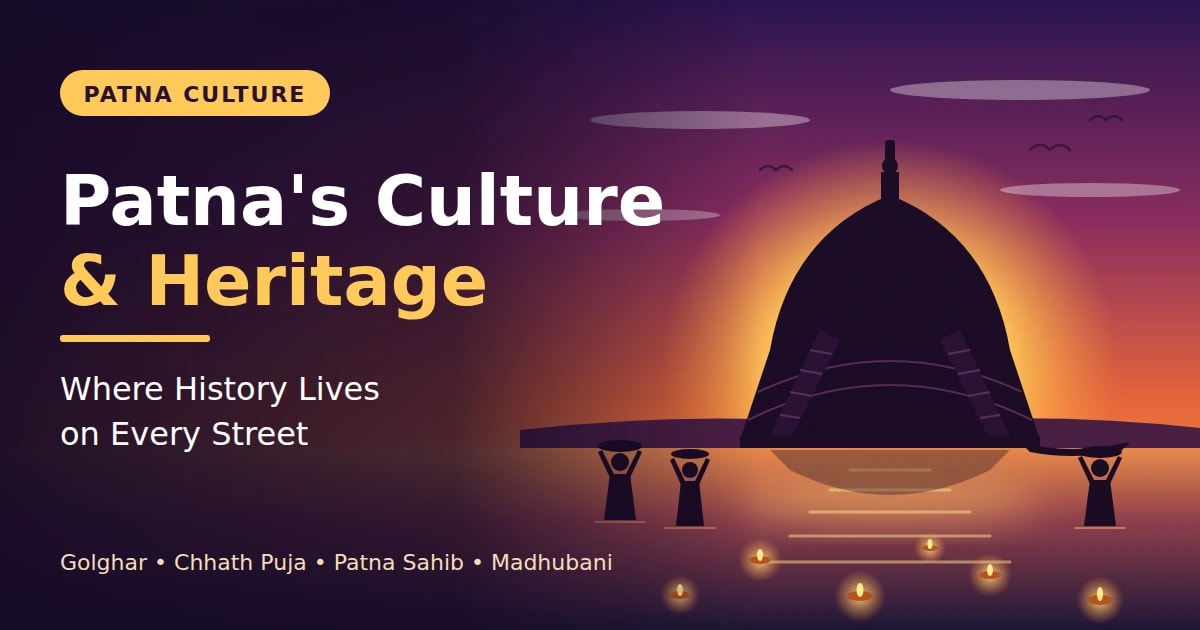
- Golghar: Built in 1786 as a granary, this beehive-shaped structure is Patna’s most recognisable landmark. Climb the stairs for a view of the Ganga and the city.
- Takht Sri Patna Sahib: One of the five Takhts of Sikhism, this gurdwara marks the birthplace of Guru Gobind Singh and draws pilgrims from across the world.
- Khuda Bakhsh Oriental Library: Home to rare manuscripts and books in Arabic, Persian and other languages, it is one of India’s notable libraries.
- Patna Museum: Known for its collection of ancient sculptures, coins and artefacts from the region.
- Gandhi Maidan: A large open ground linked to major moments in the freedom movement and a favourite spot for evening walks.
- Mahavir Mandir: A popular temple near Patna Junction visited by thousands of devotees every day.
Festivals That Define the City
Chhath

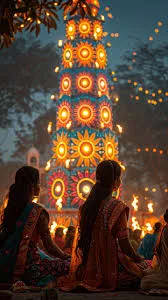
Chhath is the biggest festival in Bihar and holds a special place in Patna. Devotees offer prayers to the Sun God and Chhathi Maiya, standing in water at the Ganga ghats at sunset and sunrise. Families prepare thekua and fruit offerings with great care and cleanliness. The sight of thousands of lamps glowing along the river is unforgettable. The festival usually falls in October or November, so check the official calendar for the exact dates each year.
Durga Puja
Elaborate pandals, creative decorations and evening crowds fill the city during Navratri and Durga Puja. Families go pandal-hopping together, and local committees compete to build the most impressive displays.
Holi, Diwali and Eid
Patna celebrates all major festivals with energy. Holi is colourful and loud, Diwali brings lights and sweets, and Eid is marked by prayers, gatherings and shared meals. This mix of traditions is a big part of the city’s character.
Makar Sankranti
Celebrated in January with dahi chura, til sweets and kite flying, it is a day many Patnaites remember fondly from childhood.
Language, Art and Literature
Bhojpuri, Maithili, Magahi and Hindi are all heard across the region, and each carries its own folk songs, proverbs and stories. Bihar is also famous
Celebrated in January with dahi chura, til sweets and kite flying, it is a day many Patnaites remember fondly from childhood.
Language, Art and Literature
Bhojpuri, Maithili, Magahi and Hindi are all heard across the region, and each carries its own folk songs, proverbs and stories. Bihar is also famous for Madhubani painting, which has made its way from village walls to galleries around the world. Poets, writers and theatre groups continue to keep Patna’s literary tradition alive, and events like the Patna Book Fair attract readers every year.
Everyday Culture
- Evening addas: Chai stalls where friends discuss politics, cricket and films
- Ganga ghats: Quiet morning walks, rituals and boat rides
- Music: From folk and devotional songs to the popular Bhojpuri film industry
- Hospitality: Guests are treated with warmth, and refusing food is almost impossible
Tips for Visitors
- The best time to visit is from October to March when the weather is pleasant.
- Dress modestly at religious places, and remove footwear where required.
- Plan visits to Golghar and the museum in the morning to avoid crowds.
- Check timings and entry fees in advance, as they may change.
- Ask locals for recommendations; they are usually happy to share their favourite spots.
Preserving Patna’s Heritage
Rapid development, traffic and encroachment put pressure on old buildings and public spaces. Citizens, historians and local groups are increasingly speaking up for protecting heritage sites, cleaning the ghats and promoting local art. Every visit, every story shared and every festival celebrated responsibly helps keep this legacy alive.
Final Word
Patna may not always get the attention given to bigger cities, but its history is deeper than most. It is a place where ancient ruins sit beside busy markets and where the same river that watched empires rise now watches families celebrate Chhath. To know Patna is to know a city that has always carried its past with pride.
Which is your favourite place or festival in Patna? Tell us in the comments!