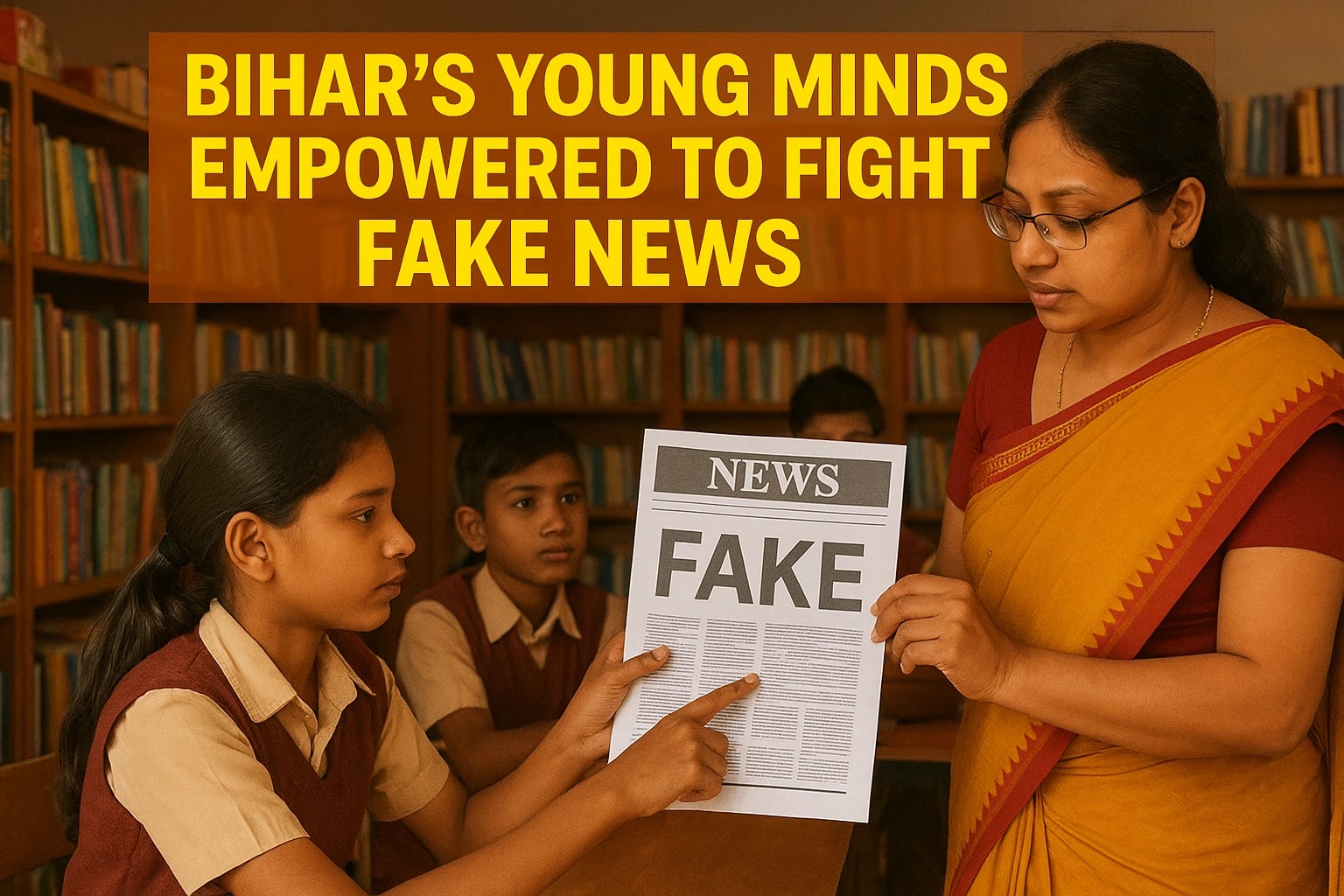
In the heart of Bihar, a quietly powerful transformation is taking root in the classrooms of community libraries. Here, students are no longer just reading books—they are being taught to question, evaluate, and recognise the hidden dangers of misinformation. This initiative is more than just education; it is a movement of empowerment, equipping young minds to navigate a world flooded with digital noise.
n these thriving library-classrooms, lessons go beyond the textbooks. Pupils are introduced to the concept of fact vs fiction, shown how rumours spread fast and how one careless share can damage trust. They play out real scenarios, such as discerning a sensational headline from credible news, or spotting inconsistencies in viral social-media posts. Local educators emphasise that when children learn to ask “Is this true?” before hitting ‘share’, they become guardians of their own knowledge and protectors
of community information.
The impact is visible. Students who once accepted everything they saw are now thoughtful and cautious. Teachers observe that self-confidence builds as children identify fake reports, challenge them and seek verification. The libraries traditionally quiet corners of reading are now vibrant hubs where dialogue, debate and discovery happen. Here, literacy is not just about reading words, but reading the world.
This initiative in Bihar holds a lesson for others. In an age of deep fakes, echo-chambers and rapid viral cascades, the ability to think critically is more urgent than ever. If classrooms become spaces where young minds practise scrutiny, ask questions and demand evidence, then democracy itself becomes stronger.
Bihar’s experiment is a beacon: it tells us that education must evolve. Books remain vital, but so does the skill of interpreting. By teaching children to look beyond the surface, these library-classrooms are nurturing informed citizens ready not just to consume information but to question it.
beyond the surface, these library-classrooms are nurturing informed citizens ready not just to consume information but to question it.