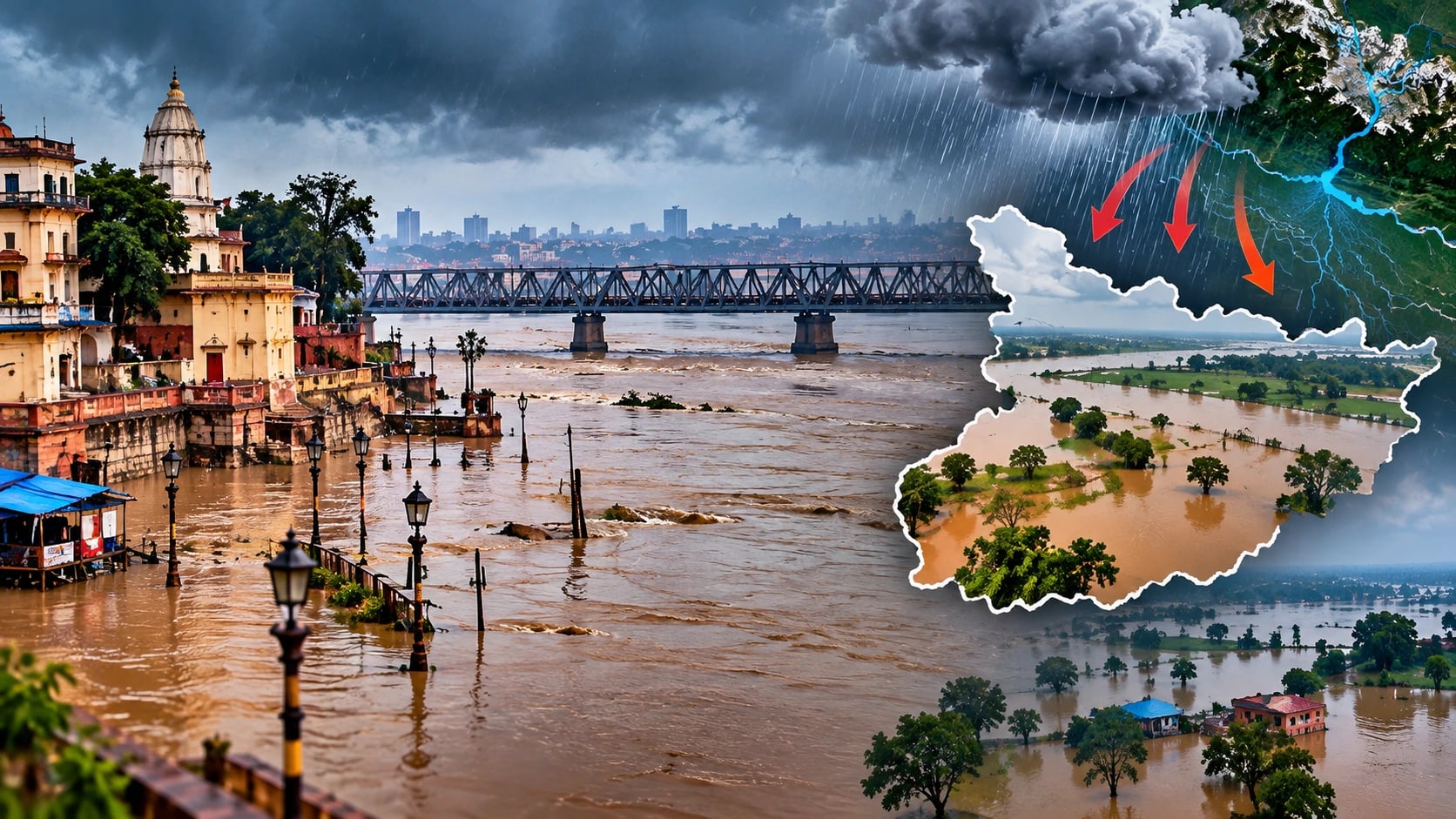
Patna, September 26, 2026: Bihar’s flood situation remains a concern as several major rivers continue to flow above their warning or danger levels, while fresh rainfall in the catchment areas of the Gandak River in Nepal has prompted the state government to strengthen preparedness in vulnerable districts.
For Patna, the latest river data shows that the Ganga remains above the warning level at multiple monitoring stations, although some gauges around the city are showing a falling or steady trend.
Fresh Rain in Nepal Triggers Preparedness Measures
On Saturday, the Bihar government stepped up preparedness after heavy rainfall was reported in the catchment areas of the Gandak River in Nepal.
The development is significant because rainfall in the upstream catchment can increase river discharge downstream and affect areas of Bihar.
According to an official statement cited by PTI, authorities have been asked to remain alert in vulnerable districts and strengthen preparedness measures.
The latest development does not by itself mean that a new flood wave is entering Patna, but it is an important factor being monitored by flood-control authorities.
What Is the Situation Around Patna?
The Bihar government’s flood-monitoring system shows that several Ganga stations associated with Patna remained above their warning levels in the latest available readings.
At Gandhighat, the river was recorded at around 47.90 metres against a warning level of 47.60 metres. The trend was falling.
At Hathidah, in Patna district, the water level was around 41.13 metres against a warning level of 40.76 metres, with the latest reading showing a steady trend.
At Kolhachak, the level was around

This means the situation is not uniform across Patna district. River levels can differ considerably between monitoring locations, so residents should rely on local administration and official alerts rather than assuming that conditions are the same throughout the district.
Several Rivers Across Bihar Still Above Warning Levels
The flood concern is not limited to the Ganga.
The Bihar Water Resources Department’s monitoring data shows multiple rivers at or above warning levels, including the Gandak, Kosi, Bagmati, Kamla-Balan and Burhi Gandak at different monitoring stations. Some stations were also above their designated danger levels.
For example, the latest available data showed:
- Gandak at Dumariaghat: above warning level and rising
- Bagmati at Dheng Bridge: above warning level and rising
- Kosi at Birpur: above danger level
- Kosi at Baltara: above danger level
- Burhi Gandak at Khagaria: above warning level
- Ganga at Hathidah: above warning level
- Ganga at Gandhighat: above warning level, with a falling trend
The data highlights why Bihar’s flood situation continues to require close monitoring even when water levels at individual locations begin to decline.
More Than 50 Lakh People Affected Earlier This Month
The scale of the 2026 flood situation has been significant.
According to a September 23 report, around
The data highlights why Bihar’s flood situation continues to require close monitoring even when water levels at individual locations begin to decline.
More Than 50 Lakh People Affected Earlier This Month
The scale of the 2026 flood situation has been significant.
According to a September 23 report, around 50.49 lakh people across 15 districts had been affected, with flooding reported in 576 gram panchayats.
The affected districts included Patna, Bhojpur, Saran, Vaishali, Bhagalpur, Begusarai, Buxar, Samastipur, Munger, Katihar, Lakhisarai, Khagaria, Purnea, Madhepura and Arwal.
These figures represent the situation reported at that point in time and should not be interpreted as the number of people currently under active floodwater on September 26.
Patna Is Also Dealing With the After-Effects
Flood management does not end when the water level begins to fall.
In Patna, receding Ganga waters have left silt, waste and stagnant water at several ghats. The Patna Municipal Corporation has begun cleaning and mosquito-control operations, while health officials have warned residents about the increased risk of water- and mosquito-borne diseases.
For residents in affected areas, the post-flood period can therefore bring a different set of problems, including sanitation concerns, contaminated water and mosquito breeding.
What Should Patna Residents Watch Now?
For people living in low-lying or riverine areas of Patna district, the key things to monitor are:
1. Ganga water levels
Residents should keep an eye on official readings and local administration alerts, particularly if they live close to the river or in low-lying areas.
2. Rainfall in upstream catchments
Rainfall in neighbouring states and Nepal can influence river discharge entering Bihar. The latest preparedness measures related to the Gandak demonstrate why upstream rainfall remains important.
3. Local waterlogging
Even when a river’s level is falling, drainage problems and stagnant water can continue affecting roads and residential areas.
4. Sanitation and drinking water
After floodwater recedes, residents should be particularly cautious about drinking-water sources and stagnant water around homes.
5. Official evacuation or relief instructions
People in vulnerable areas should follow instructions from district authorities rather than relying on unverified social-media messages.
Relief Measures Continue
The Bihar government has also been providing financial assistance to flood-affected families.
On September 15, the Chief Minister’s Office said that ₹579.23 crore in ex-gratia assistance had been transferred through DBT to the bank accounts of 8,27,472 affected families, at ₹7,000 per family.
Relief and rescue operations have continued across affected districts as authorities monitor river levels and vulnerable locations.
What Happens Next?
The immediate focus for Bihar will be on river-level monitoring, upstream rainfall, embankment conditions and the situation in low-lying areas.
For Patna, the latest readings offer some mixed signals: several Ganga monitoring stations remain above warning levels, but some are showing falling or steady trends. At the same time, fresh rainfall in the Gandak’s Nepal catchment has led authorities to strengthen preparedness.
Therefore, the current situation should be described as one requiring continued vigilance rather than assuming either that the flood threat is over or that a fresh major flood wave is certain.
Conclusion
Bihar’s 2026 flood situation continues to require close monitoring even as water levels at some locations begin to stabilise or recede.
For Patna residents, the most important developments to watch are the Ganga’s levels at key monitoring stations, rainfall in upstream catchments, local waterlogging and official administration alerts.
With several rivers across Bihar still above warning or danger levels, authorities remain on alert, while the focus in Patna is increasingly shifting from immediate flooding in some areas to preparedness, drainage, sanitation and post-flood recovery.