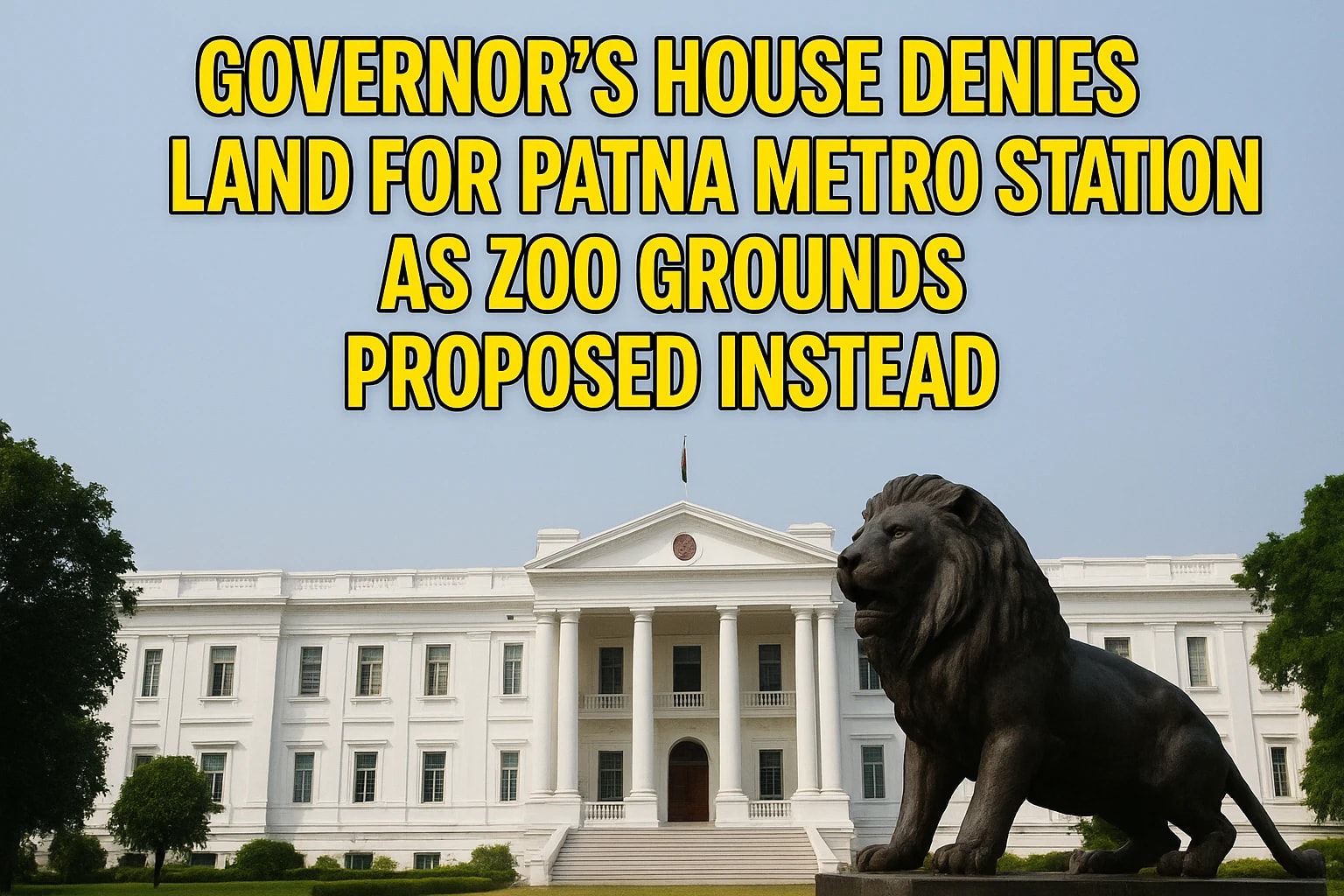
In a fresh twist to the long-pending metro project in Patna, the office of the Governor has declined to allocate land for a new station, redirecting the Patna Metro plan toward the nearby zoo premises. The decision has sent ripples through the planners and public alike, raising questions about the project’s timeline and underlying priorities.
The row arose when the Patna Metro Rail Corporation (PMRC) approached the Raj Bhavan seeking a No Objection Certificate (NOC) for site allocation within the Raj Bhavan grounds. The reply was crisp: earlier contributions of about 34 acres had already been made for the zoo’s expansion and no further land could be diverted. Accordingly, officials advised using the zoo campus for both temporary and permanent station infrastructure.
For citizens of Patna, the decision feels like another hiccup in a project marked by delays and mounting expectations. The east-west corridor of the metro, designed to decongest the city and link major hubs, already carries the weight of over Rs 3,000 crore and public hopes. But with land allocation now in fresh jeopardy, the momentum risks fading.
City commuters and planners alike are left contemplating the implications. Will the suggested shift to zoo land mean delays, extra costs or even altered routes? Environmental and logistical concerns loom large. A metro station amidst zoo premises may seem practical, yet it stirs debate about public-space usage, safety, and green cover.

In the corridors of power, officials emphasise that the project remains on track. The PMRC has affirmed commitment to the planned station count and tunnel stretches. But residents watching daily traffic snarls, crowded buses and road-works wonder if such assurances translate into action or remain just promises.
For Patna, a city yearning for modern transit and smoother mobility, this moment is more than policy detail. It is a litmus test for governance, planning integrity and the real cost of progress. As trees shadow Raj Bhavan’s lawns and the metro plan braces for a reroute, the message is clear: living landmarks like zoos and political estates cannot easily bend to infrastructure demands. And for the state’s capital, that means the road ahead may be longer than imagined.