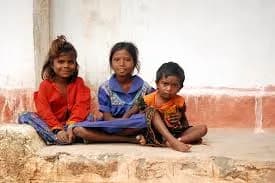
India is reportedly on track to meet its goal of halving multidimensional poverty ahead of the 2030 deadline, but a significant gap remains in basic services for children. According to a recent UN report, approximately 206 million children in the country still lack access to one or more essential services such as education, health care, clean water, sanitation, nutrition or adequate housing. The report emphasises that though poverty levels have declined markedly, the quality and reach of service delivery require urgent strengthening. Analysts noted that investment in child well-being has plateaued in several regions, and disparities are stark between states. Government agencies reaffirmed their commitment to expanding infrastructure in rural and urban areas, and to raising service-coverage benchmarks. Policy-makers indicated enhanced focus on integrated development programmes, especially in states with higher deprivation indexes. Civil society observers added that achieving targets on poverty reduction is commendable, but the large number of children deprived underscores the dual challenge of income improvement and social investment. The study is expected to prompt renewed policy emphasis on early-childhood development, school-retention initiatives and universal sanitation and water systems. Acknowledging the scale of the gap, officials said that bridging this divide will be central to the country’s next phase of development.
© Images used for illustrative purposes only. Copyrights belong to their respective owners.
India Advances Towards Poverty Reduction Goal, Yet 206 Million Children Lack Essential Services
Shivani1 min read
Health