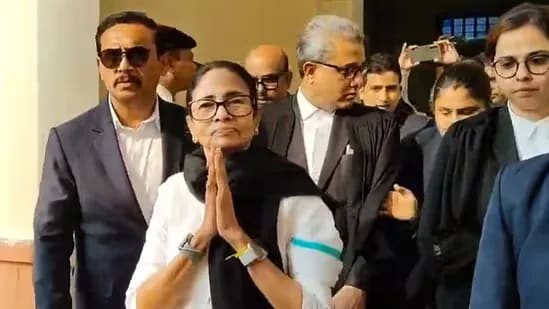
The Supreme Court of India on Wednesday began hearing a petition from Mamata Banerjee challenging the Special Intensive Revision (SIR) of electoral rolls being carried out in West Bengal ahead of the upcoming state assembly elections. This legal action has drawn attention because similar revisions in other states have not led to a high-profile Supreme Court challenge at this stage.
Banerjee has argued that the SIR process in Bengal threatens to disenfranchise millions of voters and create an uneven political arena so close to elections. She has told the court that the documentation requirements under the revision drive are arbitrary and could lead to legitimate voters being removed from the rolls, disproportionately affecting ordinary citizens. Banerjee has asked the court to direct that elections be held based on the existing voter list prepared last year instead of the one being updated through SIR.
The chief minister’s petition claims that the Election Commission’s current methods lack transparency and could disrupt democratic rights. One of her key contentions is that errors in
the revision, including the omission of valid names and incorrect classifications, risk excluding eligible voters. She has also asserted that the process was begun hastily and without sufficient safeguards, prompting her to seek judicial intervention.
Political leaders in Bengal have framed the challenge as necessary to protect electoral integrity in their state. Banerjee personally approached the highest court after domestic attempts to resolve concerns with electoral authorities failed to satisfy her government’s demands. The Supreme Court has issued notices to the Election Commission and other respondents, and further hearings are scheduled as both sides present arguments.
The case is significant because it reflects rising tensions between a state government and the Election Commission over how voter lists are updated before elections, underscoring the debate over electoral procedures and voter rights in the Indian democratic process.
© Images used for illustrative purposes only. Copyrights belong to their respective owners.