
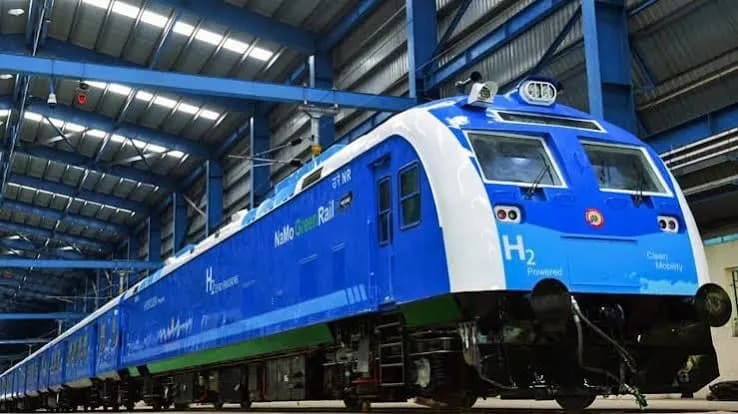
India's ambitious move towards cleaner transportation is gaining international attention with the operation of its first hydrogen-powered passenger train.
The hydrogen train, developed by Indian Railways, uses hydrogen fuel-cell technology to generate electricity for propulsion. At the point of use, hydrogen-powered systems produce water vapour rather than conventional diesel exhaust.
The train has a total power output of around 2,400 kW, generated through its hydrogen-powered driving units. It operates using hydrogen storage systems, fuel cells and batteries to provide power.
The train has been operating on the Jind-Sonipat section in Haryana. Recent reports indicate that it has already covered thousands of kilometres in service since its July launch, demonstrating the potential of hydrogen technology for railway operations.
One of the major advantages of hydrogen trains is their potential to replace diesel-powered trains on routes where conventional railway electrification may be difficult or economically challenging.
The technology is part of India's wider push to reduce emissions and explore alternative energy sources for transportation.
However, hydrogen railway technology also faces challenges, including the cost of producing and storing hydrogen, building refuelling infrastructure and ensuring the availability of hydrogen generated using low-carbon energy.
Why it matters: If successfully scaled up, hydrogen trains could help India reduce diesel consumption and emissions on non-electrified railway routes while strengthening the country's position in clean transportation technology.
5. US-Canada Trade War Intensifies as Canada Announces Retaliatory Tariffs
The trade dispute between the United States and Canada has escalated further, with Canada announcing retaliatory tariffs on approximately

The latest measures target more than 700 American products, including categories such as steel and appliances, according to reports.
The move represents Canada's response to US tariff measures and marks another escalation in an increasingly complicated trade relationship between the two North American neighbours.
Trade disputes of this scale can affect businesses far beyond the countries directly involved. Tariffs can increase the cost of imported products, put pressure on manufacturers and potentially lead to higher prices for consumers.
Businesses operating across the US-Canada supply chain are particularly vulnerable because the two economies are deeply interconnected. Industries including manufacturing, agriculture, energy and automotive production rely heavily on cross-border trade.
Canada has also introduced support measures aimed at helping affected businesses and workers cope with the economic impact of the dispute.
The confrontation is being closely watched internationally because prolonged tariff battles can affect investment decisions, supply chains and global economic confidence.
Why it matters: The US and Canada share one of the world's largest trading relationships, meaning prolonged tariff escalation could have consequences for businesses and consumers on both sides of the border.
Why it matters: The US and Canada share one of the world's largest trading relationships, meaning prolonged tariff escalation could have consequences for businesses and consumers on both sides of the border.