
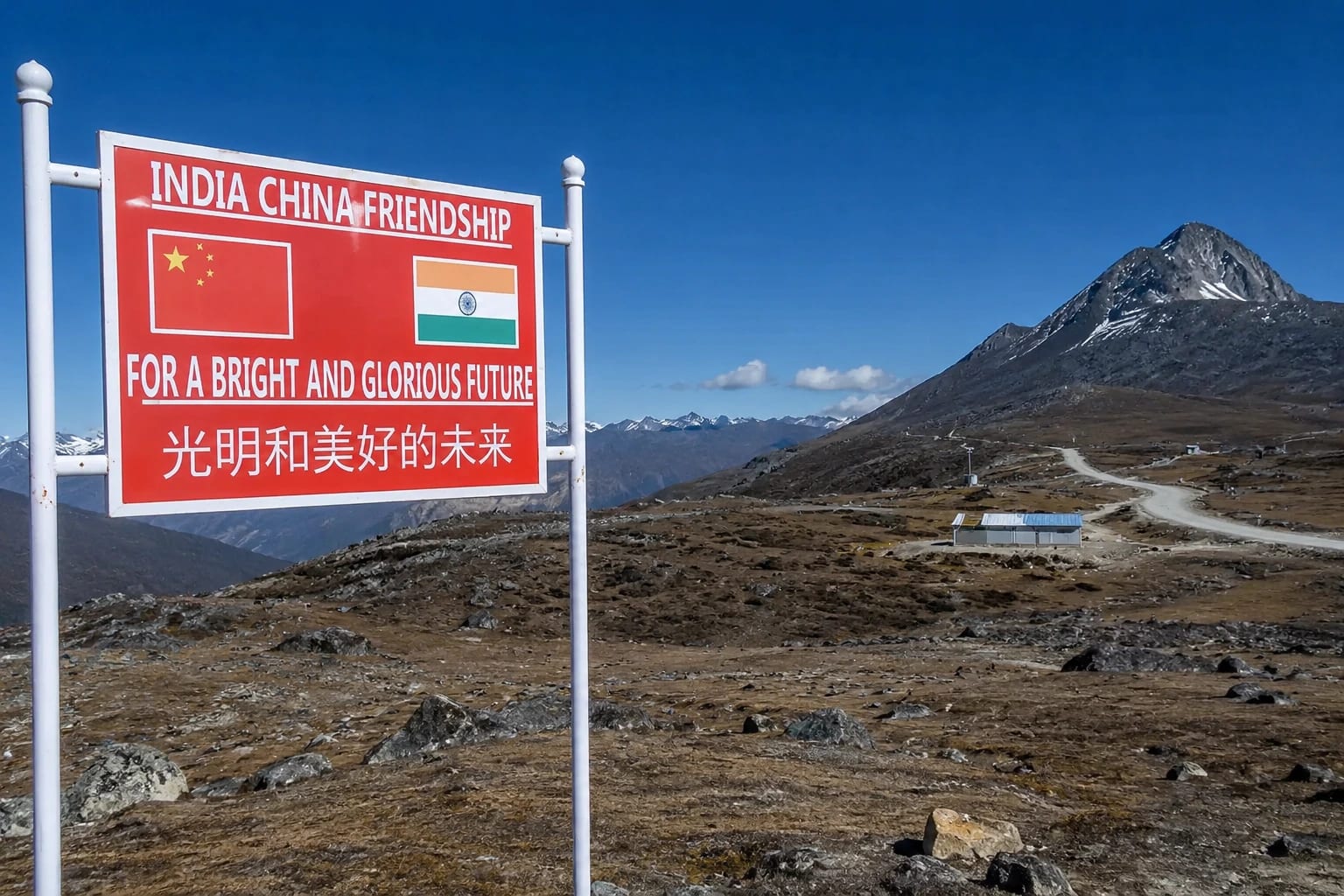
The long-running border dispute between India and China over Arunachal Pradesh continues to remain a sensitive issue in bilateral relations. India maintains that Arunachal Pradesh is an integral and inseparable part of the country, while China claims large parts of the northeastern state, referring to it as “Zangnan” or “South Tibet.”
At the heart of the dispute is the McMahon Line, established during the 1914 Simla Convention. India considers this line the basis of the boundary in the eastern sector, while China rejects the agreement and does not recognise the McMahon Line as a legitimate international boundary.
The dispute became particularly significant during the 1962 India-China war, when Chinese forces entered parts of the then North-East Frontier Agency, which later became Arunachal Pradesh. Chinese troops subsequently withdrew from the region following a unilateral ceasefire.
In recent years, tensions have again focused on areas around Tawang, a strategically important region close to the India-China border. Both countries have strengthened infrastructure and military capabilities along the Line of Actual Control (LAC), while continuing diplomatic and military-level discussions.
China has also repeatedly objected to visits by senior Indian leaders to Arunachal Pradesh and has attempted to rename places in the state. India has rejected these moves, stating that assigning invented names does not change the reality that Arunachal Pradesh is part of India.
The Arunachal Pradesh dispute remains one of the most challenging aspects of India-China relations. While both sides continue negotiations to maintain peace along the border, the competing territorial claims and