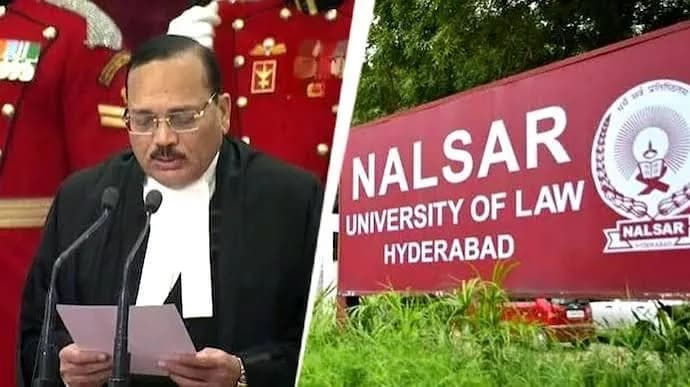
Hyderabad: A section of students at the National Academy of Legal Studies and Research (NALSAR) University of Law in Hyderabad has objected to the reported invitation of Chief Justice of India (CJI) Surya Kant as the chief guest for the university’s upcoming convocation.
According to reports, more than 450 students from the 2026 graduating batch have signed a representation urging the university administration to reconsider the decision. The students have expressed concerns over remarks and conduct attributed to CJI Surya Kant during proceedings related to alleged police excesses against protesters in Delhi.
Why Are Students Opposing the Invitation?
The students' objection is linked to proceedings concerning allegations of police action against protesters during the “Chalo Sansad” demonstrations at Jantar Mantar. Reports say a bench led by the CJI declined to initiate suo motu proceedings over the allegations.
Students have particularly raised concerns over remarks reportedly made during the hearing, including comments indicating that the court did not have time to watch video evidence. They argue that such an approach does not align with the constitutional values and commitment to access to justice that they have been taught at the law university.
Students Cite Constitutional Values
In their representation, the graduating students reportedly said that a convocation is not merely a formal ceremony but also an occasion that reflects the institution's values. They argued that receiving their degrees from a dignitary whose recent public conduct they perceive as dismissive of allegations of police brutality would be uncomfortable for them.
The students have

University Yet to Confirm Final Decision
The university administration has reportedly not officially confirmed who will serve as the chief guest at the upcoming convocation. The reported invitation and student opposition have nevertheless sparked a wider discussion about judicial conduct, constitutional values and the right of students to express disagreement with institutional decisions.
The controversy comes at a time when student activism around issues of constitutional rights and civil liberties continues to draw attention across law campuses. The final decision regarding the convocation’s chief guest is now being closely watched.