
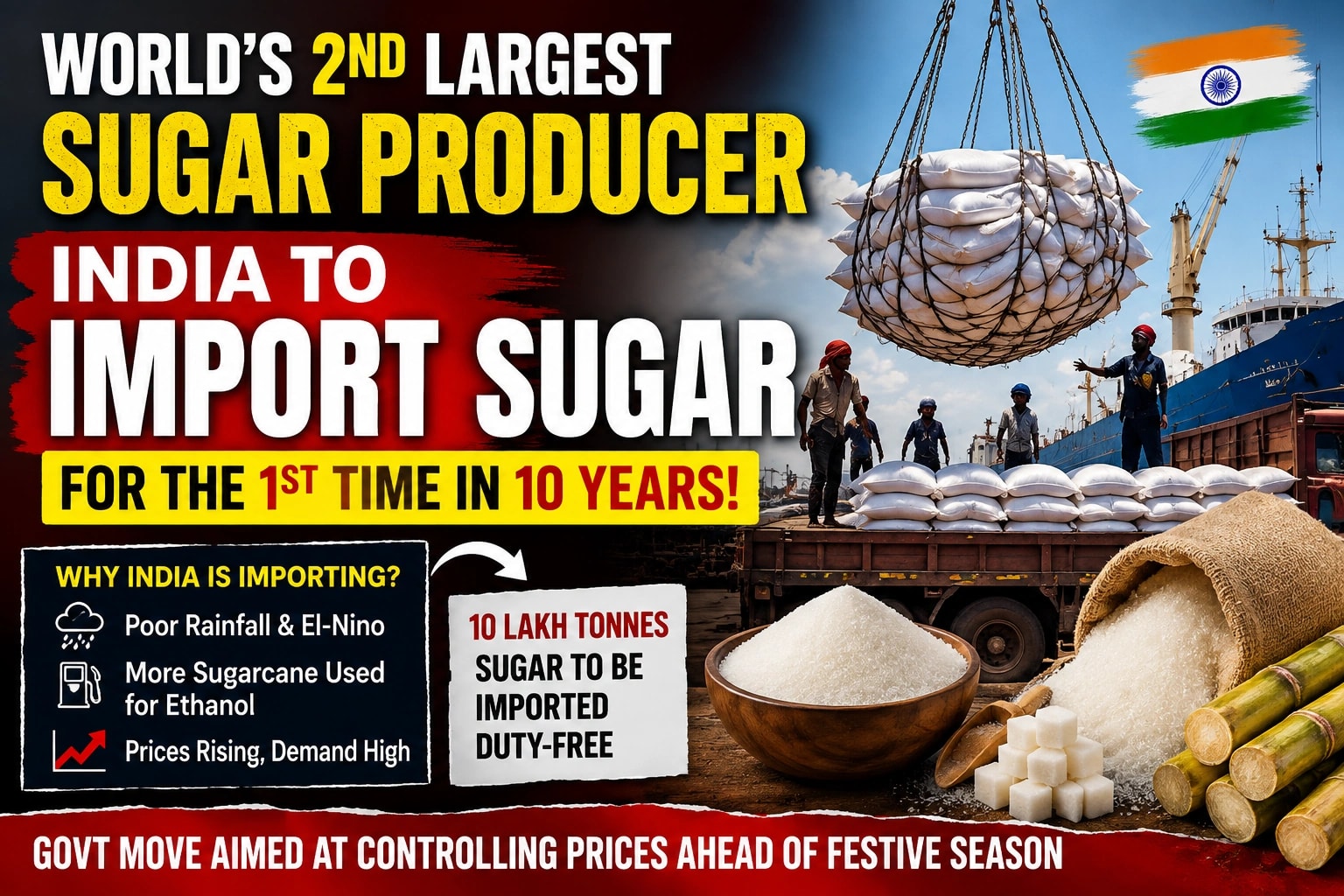
New Delhi, August 21, 2026: India, one of the world’s largest sugar producers, is set to import 10 lakh tonnes (1 million metric tonnes) of raw sugar, marking the country’s first major sugar import decision in nearly a decade. The government has allowed duty-free imports to help cool rising domestic sugar prices and ensure adequate supplies ahead of the upcoming festive season.
The decision comes at a time when India’s domestic sugar market is facing pressure from lower production, declining opening stocks and strong demand. Sugar prices have reportedly climbed sharply in recent months, with wholesale prices in some major markets reaching record levels.
Why is India importing sugar?
Two major factors are putting pressure on sugar availability.
First, poor rainfall and the growing risk of El Niño have raised concerns over sugarcane production, particularly in major producing states such as Maharashtra and Karnataka. Lower cane availability could translate into reduced sugar output.
Second, a significant amount of sugarcane is being diverted towards ethanol production as India continues its petrol-blending programme. Around 3 million tonnes of sugar were reportedly diverted to ethanol production during the current year, reducing the amount available for producing conventional sugar.
Festival demand adds to the pressure
The timing of the decision is significant. India is entering a period of high sugar consumption, with major festivals such as Ganesh Chaturthi, Dussehra and Diwali approaching. The government’s import move is aimed at preventing supply shortages and containing further price increases during this period.
The permitted imports will be

What does this mean for consumers?
The government hopes that additional imported sugar will increase domestic availability and ease price pressures. However, shipments—particularly from major suppliers such as Brazil—may take time to arrive because of transportation timelines.
India’s move is notable because the country has traditionally produced enough sugar for domestic consumption and has also been a major exporter. The current situation highlights how weather conditions, food demand and the country’s ethanol policy are increasingly influencing India’s sugar balance.
For consumers, the key question now is whether the additional imports can bring sugar prices under control before the festive season reaches its peak.