The Spark at the Red Fort
In his national address on August 15, Prime Minister Modi stated that while armed insurgency (hathiyari Naxals) in forested regions had been largely curbed, an ideological threat remained entrenched in societal and institutional spaces. He called for identifying and isolating those who seek to create unrest or manipulate policy through a Maoist or subversive mindset.
The phrase quickly ignited a fierce national debate over political rhetoric, free expression, and the labeling of ideological dissent.
Political Flashpoint and Opposition Pushback
Opposition leaders and civil society critics sharply condemned the remark, alleging that terms like "dimagi Naxal" serve to delegitimize democratic dissent, students, academics, and activists.
-
P. Chidambaram (Congress): The former Union Home Minister posted a sarcastic retort on X declaring, "I am proud to be a dimagi naxal!", which drew severe condemnation from senior BJP leaders, including Ravi Shankar Prasad and Sudhanshu Trivedi.
-
Jairam Ramesh & Renuka Chowdhury (Congress): Slammed the phrasing as a continuation of political name-calling aimed at stigmatizing the intelligentsia.
-
Youth & Student Groups: Activists and youth spokespersons criticized the terminology, warning against branding students or critical youth as insurgents.
In response, the ruling party defended the Prime Minister’s terminology. Union Minister Kiren Rijiju clarified that the remark was not aimed

Satire and Social Media Mobilization
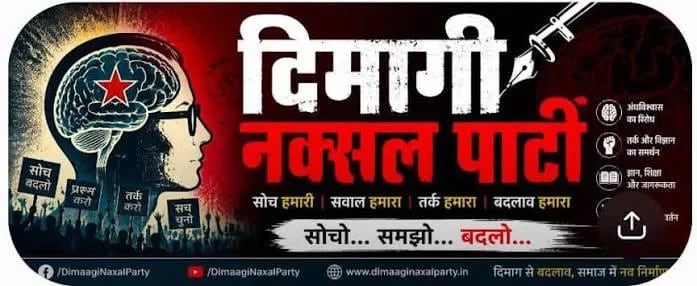
Capitalizing on the political storm, the satirical handle “Dimagi Naxal Party” emerged on Instagram and X, adopting the slogan “Think | Research | Resist”. The page attracted over 1.8 lakh followers almost overnight, utilizing humor, memes, and commentary to critique governance and youth-centric issues like unemployment, exam integrity, and free speech.
The digital phenomenon follows similar viral youth-led satirical platforms, reflecting how Gen Z and online demographics increasingly deploy internet satire as a prominent vehicle for political commentary.