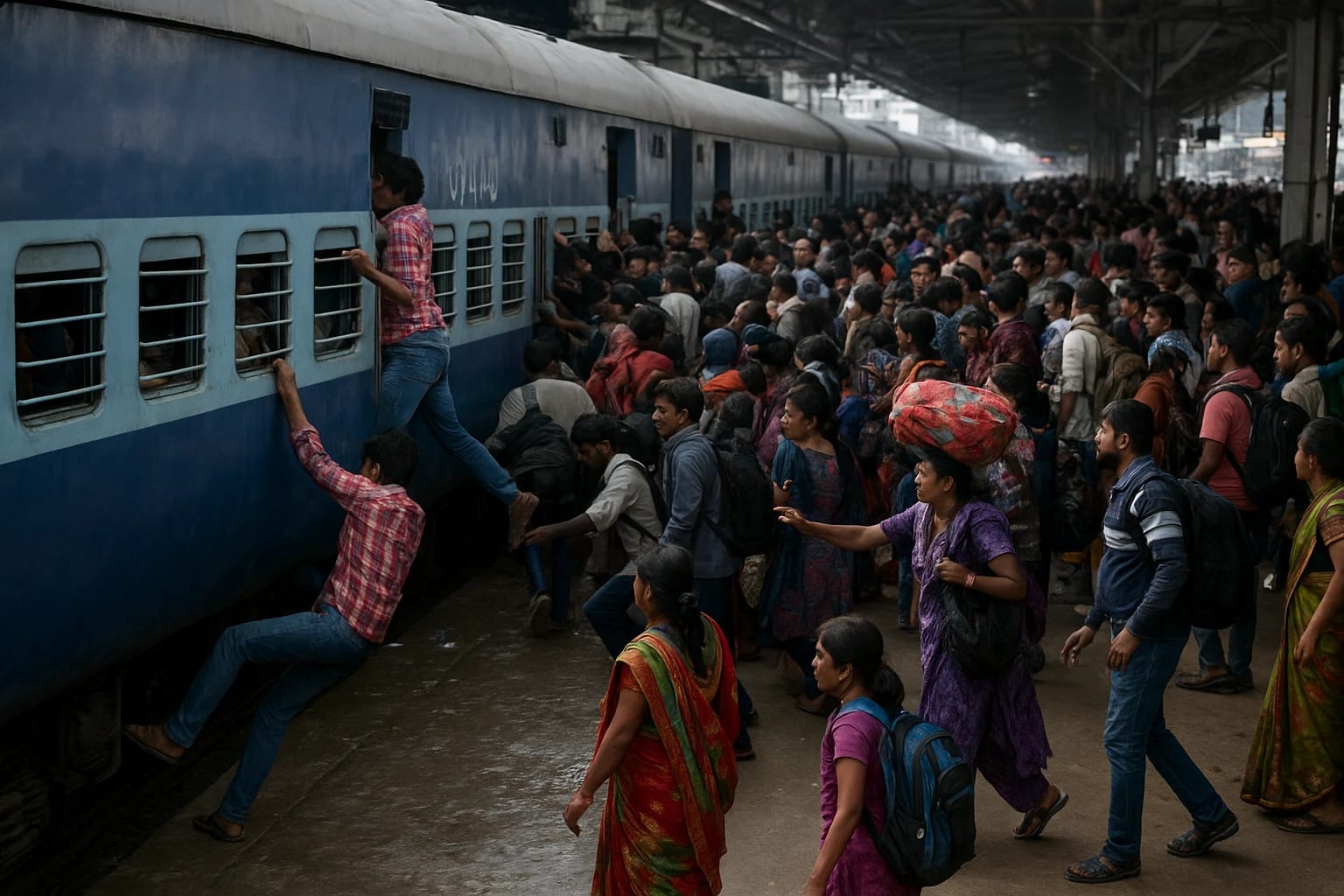
After the vibrant celebrations of Chhath Puja, a tidal wave of travellers rushed to leave Bihar, turning the platforms of Patna’s major railway stations into scenes of chaos and confusion. The surge hit Patna Junction, Rajendranagar Terminal and Danapur Station as people tried to board trains bound for Delhi, Punjab and other states, many beyond capacity and control.
At the height of the rush, passengers clung to coach windows, climbed on roofs, and even attempted to board moving trains. On one train, the number of travellers far exceeded the seating and standing capacity, forcing staff to pull back more than fifty riders who had boarded illegally. Flooded waiting areas at the stations added to the misery as water entered the holding zones and stranded passengers huddled on wet floors, luggage in tow.
The Railway Protection Force (RPF) and railway staff raced to handle the situation, deploying special trains and additional security. Despite these efforts, travellers described the scene as “a long and exhausting struggle” rather than orderly travel. Many complained there was no clear guidance for boarding, no structured exit plan and no sense of control. They said the personnel were visible but the system felt unprepared.
Officials confirmed that more than a dozen special trains ran that day including the Sampoorna Kranti Express and the Patna–Kota Express—yet even this effort failed to stem the tide of people. The situation laid bare the huge pressure Bihar’s rail infrastructure faces at key moments of cultural return.
Beyond the logistical nightmares, the incident raises deeper questions