
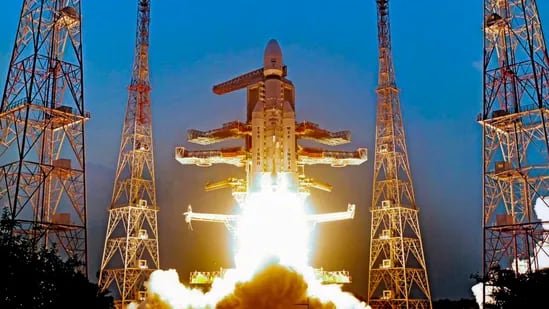
On 2 November 2025, ISRO successfully launched its heaviest communication satellite, CMS‑03 (also referred to as GSAT-7R) aboard the heavy-lift rocket LVM3‑M5 from the Satish Dhawān Space Centre in Sriharikota. The satellite, weighing roughly 4,410 kg, is destined for Geosynchronous Transfer Orbit (GTO) and marks a major milestone for India’s launch capability.
The mission is significant on multiple fronts: first, it signals that India can now deploy heavier communications satellites from its own soil without dependence on foreign launch providers; second, the satellite enhances India’s strategic and civilian communications infrastructure, particularly over wide oceanic regions.
In his address, the Prime Minister highlighted this achievement as evidence of India’s rising technological self-reliance and praised ISRO’s teams. The launch comes at a time when India is increasingly emphasising space and technology as key to its future growth and security. The success also supports upcoming human spaceflight ambitions and advanced satellite missions. Analysts say that the increased payload capacity of the LVM3-M5 gives India more flexibility in mission design and strengthens the country’s global standing in the space domain.
This is a major event that underlines how India is positioning itself at the cutting edge of technology and standing at par with nations advanced in space and technology